Managing a single WooCommerce store is challenging enough, but when your operations span multiple domains and storefronts, keeping product data synchronized can become a logistical nightmare. Manually updating inventory, prices, and product descriptions across each store is not only time-consuming but also prone to costly human error. The WooCommerce API Product Sync with Multiple WooCommerce Stores (Shops) plugin, developed by obtaininfotech, directly addresses this pain point by automating the flow of data between your stores. This tool is engineered for store owners who need a reliable, real-time bridge between their e-commerce platforms, ensuring that a change made in one location is instantly reflected everywhere else. By leveraging the power of the WooCommerce REST API, this plugin eliminates the need for manual duplication, allowing you to scale your multi-store operations with confidence and precision.
Key Features
This plugin is packed with robust features designed to handle complex synchronization tasks. Below is a breakdown of the core functionalities that make it a comprehensive solution for multi-store management:
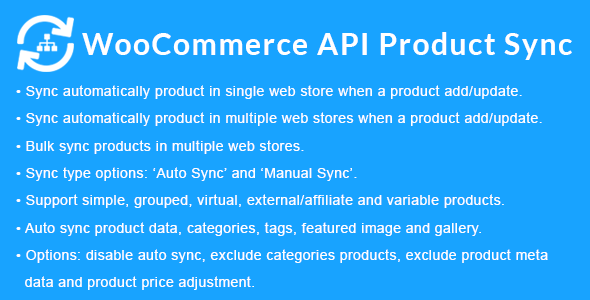
- Automatic Real-Time Sync: The plugin automatically syncs products whenever they are added or updated on a source store. This ensures that all connected web stores remain current without requiring manual intervention.
- Multi-Store Bulk Sync: Beyond real-time updates, you can perform a bulk sync across all your web stores. This feature includes powerful filters, allowing you to select products by name, category, tag, status, or define the number of results per page for efficient processing.
- Flexible Sync Modes: You can choose between Auto Sync (triggered by updates) or Manual Sync (controlled by you) to suit your workflow preferences.
- Granular Product Sync Types: Decide exactly what data gets transferred with options for Full Product, Price and Quantity, or Quantity Only sync. This allows for partial updates when necessary, saving bandwidth and time.
- Comprehensive Product Type Support: It handles all standard WooCommerce product types, including simple, grouped, virtual, external/affiliate, and variable products, ensuring no product is left behind.
- Complete Data Synchronization: All critical product data is synced, including general information, inventory, shipping details, linked products, attributes, variations, and advanced settings.
- Taxonomy and Media Sync: Product categories, brands, and tags are automatically synced along with the product. It also handles all product media, including featured images and galleries, preserving the visual integrity of your storefronts.
- Advanced Stock Control: The stock sync option automatically updates inventory levels in destination stores whenever an order is placed on the source store, preventing overselling and maintaining accurate stock counts.
- Sync on Delete: When a product is trashed or deleted on the source store, the plugin can automatically replicate that action in the destination stores, keeping your catalog clean and consistent.
- Exclusion Controls: You have granular control over what is synced. You can exclude specific categories, tags, and product metadata from synchronization, ensuring that store-specific data remains untouched.
Who Is This For? Use Cases
The WooCommerce API Product Sync with Multiple WooCommerce Stores (Shops) plugin is a versatile solution for any business operating more than one WooCommerce store. Its utility spans various operational models, making it an essential tool for those looking to streamline their e-commerce architecture.
Multi-Regional Retailers
If you operate separate stores for different countries or regions (e.g., a US store and a UK store), this plugin is invaluable. You can manage a central catalog and push updates to all regional storefronts simultaneously. This ensures that pricing, availability, and product descriptions remain consistent across borders, while still allowing you to use the exclusion features to manage region-specific items.
Wholesale and B2B Operations
Businesses that run a retail store and a separate wholesale store often struggle to keep inventory levels aligned. This plugin bridges the gap by syncing stock levels and pricing between the two. When a wholesale order is placed, the retail store’s inventory is automatically adjusted, and vice versa, providing a unified view of your stock.
Digital Agencies and Store Developers
For agencies managing multiple client stores, this plugin is a powerful tool for maintenance and efficiency. It allows you to quickly duplicate a base product setup across different client sites or push global updates to all stores under your management. This reduces the time spent on repetitive tasks and minimizes the risk of inconsistencies.
Franchise or Multi-Brand Store Networks
If you manage a network of franchise stores or multiple distinct brands that share a common backend inventory, this plugin ensures that all storefronts display the same accurate product information. It simplifies the process of updating catalogs for seasonal changes or new product launches across the entire network.
Technical Details & Compatibility
Understanding the technical requirements is crucial for a smooth setup. This plugin is built to integrate seamlessly with the modern WooCommerce ecosystem, but it does have specific requirements you should verify before installation.
The plugin requires WooCommerce version 3.5.x or higher and WordPress version 4.7 or higher. This ensures compatibility with the latest REST API features used for synchronization. For security, the plugin mandates that SSL (HTTPS) is enabled on all WooCommerce stores involved in the sync. This is a non-negotiable requirement to protect your data during API transfers.
In terms of third-party support, the plugin offers specific compatibility with Advanced Custom Fields (ACF) and ACF PRO. It supports syncing for common field types such as Text, Text Area, Number, Email, Password, Wysiwyg Editor, Select, Checkbox, Radio Button, True/False, Google Map, Date Picker, Color Picker, and Message fields. This allows you to sync custom product data that is critical to your business operations.
The plugin is designed to be lightweight and efficient, focusing on API calls to minimize server load. The development team at obtaininfotech maintains a regular update schedule, as evidenced by the detailed changelog, which includes performance optimizations, security releases, and feature additions based on user feedback.
Pros and Cons
To help you make an informed decision, here is a balanced look at the strengths and potential limitations of this plugin.
Pros
- Time and Cost Efficiency: It eliminates the need for manual product entry across multiple stores, saving countless hours of work. At $49.00, the plugin pays for itself quickly compared to the cost of manual labor.
- Real-Time Accuracy: Automatic syncing ensures that your inventory and pricing are always up-to-date, reducing the risk of overselling or displaying incorrect information to customers.
- Comprehensive Data Handling: It syncs more than just prices and stock; it handles images, categories, attributes, and custom fields, ensuring a complete product copy.
- Granular Control: The ability to choose sync types (Full, Price & Quantity, or Quantity) and exclusion rules gives you complete control over the data flow, allowing for flexible store management.
- Proven Track Record: With over 3,113 sales on CodeCanyon, the plugin has a proven user base and is actively maintained by the developer, obtaininfotech.
Cons
- SSL Requirement: The mandatory HTTPS requirement can be a hurdle for stores still operating on HTTP, though this is a necessary security measure and an industry best practice.
- ACF Field Limitations: While it supports ACF, it does not cover all field types (e.g., Gallery, Repeater, or Flexible Content). If your workflow relies heavily on these advanced fields, you may need to find workarounds.
- Configuration Complexity: Setting up multiple store connections and configuring the various sync options may require a basic understanding of WooCommerce and REST API concepts. However, the admin interface is designed to guide you through the process.
Frequently Asked Questions
Do I need to install this plugin on both the source and destination stores?
Yes, you will need to install and activate the plugin on all WooCommerce stores that you want to include in the synchronization network. Each store needs to have the plugin active so it can both send and receive data via the WooCommerce REST API. The plugin’s settings allow you to add unlimited sync web stores, creating a central hub-and-spoke or mesh network configuration.
What happens if a product sync fails due to an API error?
The plugin is designed to handle errors gracefully. All API errors are saved to a debug.log file inside the /wp-content/plugins/woocommerce-api-product-sync/ directory. Additionally, you can view these logs in the WordPress admin dashboard. This feature provides full transparency, allowing you to quickly identify and troubleshoot any connectivity or data validation issues between your stores.
Can I sync only specific product categories between my stores?
Yes, the plugin provides an “Exclude categories products” option. By configuring this setting, you can prevent products from specific categories from being synced to destination web stores. This is particularly useful if you sell region-specific items or want to keep certain product lines separate between your retail and wholesale storefronts. You can also use the bulk sync feature to filter products by category for manual synchronization runs.
Final Verdict
In the complex world of multi-store e-commerce, the WooCommerce API Product Sync with Multiple WooCommerce Stores (Shops) plugin stands out as a reliable and feature-rich solution. It effectively solves the fundamental problem of data consistency, allowing you to manage a sprawling network of storefronts as if they were one. The plugin’s robust feature set, including real-time syncing, granular control, and comprehensive data handling, makes it a valuable asset for any serious multi-store operator.
The developer, obtaininfotech, has demonstrated a strong commitment to the product through regular updates, bug fixes, and feature enhancements, as shown in the changelog. With over 3,100 sales, it has established a solid reputation within the WooCommerce community. While it requires SSL and has some limitations with advanced ACF fields, the benefits of automation and accuracy far outweigh these minor constraints. For a one-time investment of $49.00, you gain a powerful tool that saves you time, reduces errors, and gives you the confidence to scale your business. If you are managing multiple WooCommerce stores and are tired of manual updates, this plugin is the definitive solution you have been looking for. Take control of your multi-store ecosystem and ensure your data is always in sync by purchasing this plugin today.