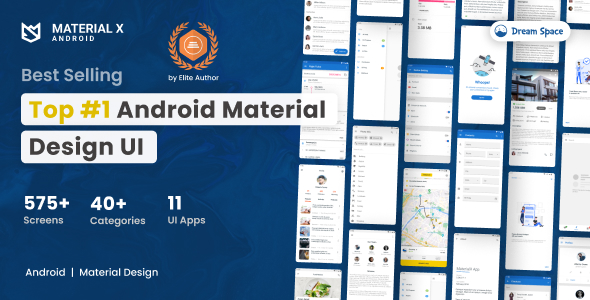
Building a modern Android app that feels intuitive and looks polished requires more than just clean code; it demands a user interface that aligns with established design principles. For developers seeking a head start, MaterialX – Android Material Design UI 3.5 by the developer dream_space offers a comprehensive solution. This UI template is engineered to bridge the gap between design concepts and functional code, providing a vast library of ready-to-use components built specifically for Android Studio. Whether you are crafting a social media platform, an e-commerce store, or a media player, MaterialX provides the foundational UI blocks to accelerate development and ensure a visually consistent, professional finish.
Key Features
- Extensive Component Library: The template includes over 30 distinct categories, from standard elements like Bottom Navigation and Toolbars to complex layouts such as Expansion Panels, Steppers, and Side Sheets. This breadth reduces the need to design common UI elements from scratch.
- Ready-to-Use Android Studio Project: MaterialX is delivered as a full Android source code project. All folders, file names, class names, variables, and methods are organized and named logically, making it straightforward to navigate, customize, and integrate specific components into your own app.
- Material Design 3 (M3) Implementation: Recent updates have introduced support for Material Design 3, including M3 Buttons, Cards, Chips, Dialogs, AppBars, and more. This ensures your app can leverage the latest visual language from Google.
- Functional App Templates: Beyond individual components, the template includes complete mini-app examples such as a Messenger, Recipe, Music, Chat, Travel, Social, and Shopping app. These serve as practical blueprints for building full-featured applications.
- Clean and Well-Documented Code: The codebase is described as clean and neat, with a focus on relative layout. The package includes project documentation to help you get started quickly and understand the structure of the template.
- Open Source Support Libraries: The template integrates popular, well-supported open-source libraries for advanced functionality, including Material Ripple Layout, Material DateTime Picker, CircularImageView, and MaterialChipsInput.
- Regular Updates with Change Log: The developer, dream_space, has demonstrated a strong commitment to maintenance, with updates spanning from version 1.0 in 2017 to the current version 3.5 in October 2025. This includes updates to the Gradle build system, SDK targets, and library dependencies.
Who Is This For? Use Cases
Independent Android Developers
For solo developers or small studios, time is the most critical resource. MaterialX – Android Material Design UI 3.5 eliminates the weeks of work required to design, code, and test dozens of standard UI screens. You can focus on your app’s unique logic and backend integration, using the template’s components for your settings screens, user profiles, media players, and list views. The clean code structure makes it easy to pick and choose only the parts you need.
Agencies and Design Teams
Agencies handling multiple client projects can use MaterialX as a rapid prototyping and development toolkit. The extensive library of over 90 screens added in version 3.0 alone provides a consistent design language that can be adapted for various client needs, from a taxi booking app to a news reader. This consistency speeds up handoffs from design to development and ensures a uniform user experience across different projects.
Startups Building an MVP
When launching a minimum viable product, speed and visual polish are both critical. MaterialX provides a professional, Material Design-compliant foundation that looks good out of the box. The included template apps (e.g., Shopping, Social, Chat) can serve as a strong starting point for a variety of startup concepts, allowing the team to validate the product idea without a heavy upfront investment in UI development.
Students and Learners
For those learning Android development, MaterialX serves as an excellent practical reference. By examining the well-organized code for components like RecyclerView, CardView, and Tab Layout, you can understand how to implement Material Design patterns correctly. The integration of open-source libraries also provides a real-world example of managing dependencies and using third-party tools effectively.
Technical Details & Compatibility
MaterialX – Android Material Design UI 3.5 is built using Android Studio and the Gradle build system. The latest update (version 3.5, October 2025) has updated the compile and target SDK to version 36, ensuring compatibility with the latest Android platform APIs and features. The project has been migrated to AndroidX since version 2.5, which is a prerequisite for modern Android development. The template is designed to be fully responsive and compatible with a wide range of screen sizes and densities, thanks to its use of relative layouts and standard Android UI practices. While the template itself is not a plugin that requires specific third-party integrations, it does rely on several well-maintained open-source libraries for specialized components like ripple effects, date pickers, and chips. The developer’s consistent update history, including updates to the Gradle wrapper and obsolete libraries, signals a strong commitment to long-term compatibility and performance.
Pros and Cons
Pros
- Massive Component Library: One of the most extensive collections of Material Design UI components available, covering nearly every common app pattern.
- Strong Development History: With over 4,100 sales and consistent updates since 2017, the template is a mature, proven, and trusted resource within the developer community.
- Excellent Value for Money: Priced at $25.00, the template provides an enormous time-saving benefit, potentially saving hundreds of hours of design and development work.
- Material Design 3 Support: The inclusion of M3 components ensures your app can adopt the latest design language from Google.
- Clean and Reusable Code: The organized naming conventions and folder structure make it easy to extract and reuse specific components in different projects.
Cons
- Not a Drag-and-Drop Visual Builder: This is a source code template, not a visual interface builder. You will need to work within Android Studio and understand Java/Kotlin to integrate the components.
- Dependency on Open-Source Libraries: The template integrates several third-party libraries. While these are well-maintained, you are dependent on their continued support for future Android versions.
- May Require Customization for Unique Branding: While highly customizable, achieving a truly unique look that deviates significantly from standard Material Design will require substantial modification of the provided styles and layouts.
Frequently Asked Questions
Is this template compatible with Kotlin?
Yes, the template is built using Android Studio and can be used with both Java and Kotlin. The project structure and code are standard Android, allowing you to add Kotlin files or convert existing Java code as needed. The primary focus is on the XML layouts and Java activity files, which are fully interoperable with Kotlin.
Can I use only a few screens from the template in my existing project?
Absolutely. The template is designed with modularity in mind. You can easily extract specific layout XML files, their corresponding Java classes, and the relevant resource files (drawables, colors, strings) and copy them into your existing Android Studio project. The well-organized naming conventions make this process straightforward.
What support is included with my purchase?
When you purchase MaterialX – Android Material Design UI 3.5 from CodeCanyon, you get access to the item support forum where you can ask the author, dream_space, questions about the template’s functionality and usage. The support typically covers bugs, pre-sale questions, and assistance with the included documentation. Custom development work or modifications to the template are usually not included in the standard support.
Final Verdict
MaterialX – Android Material Design UI 3.5 stands out as a top-tier resource for any Android developer looking to build apps with a professional, modern interface. The sheer volume of high-quality, ready-to-code UI components, combined with the developer’s proven track record of over 4,100 sales and years of consistent updates, makes this an exceptionally reliable investment. It effectively solves the common problem of converting design concepts into native code by providing a well-organized library of functional, real-world examples. For the price of $25.00, the time saved and the boost in app quality are substantial. If you are serious about building a beautiful Android application and want to skip the tedious, repetitive work of UI coding, this template is a smart, practical choice. Purchase it today and start building your app on a solid, professional foundation.


