WordPress media management often becomes a chaotic scramble through endless thumbnails, especially for sites that publish heavily or manage complex client work. Media Library Categories Premium, developed by jeffrey-wp on CodeCanyon, solves this by bringing a structured, native-feeling taxonomy system directly into your WordPress dashboard. This plugin allows you to create, assign, and filter categories for images, videos, and documents, transforming the default uploads folder into a searchable, organized database. It is built for anyone who needs to find assets quickly—from solo bloggers managing a growing portfolio to agencies juggling thousands of client files.
Key Features
This plugin doesn’t just add a checkbox; it integrates a full categorization workflow into the areas where you actually manage and insert media. The following features are designed to reduce friction and speed up your content creation process:
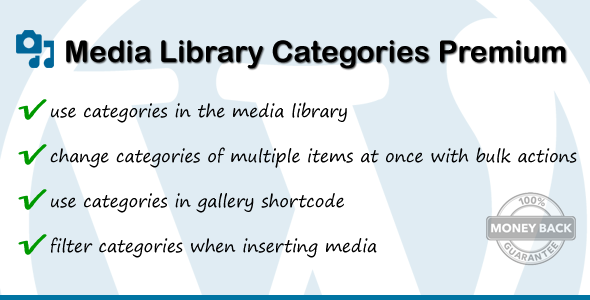
- Complete Category Management: You can add, edit, and remove categories directly from the Media Library screen. This eliminates the need to navigate to separate settings pages, keeping your workflow contained and efficient.
- Bulk Action Support: Instead of editing files one by one, you can select multiple items and use bulk actions to add or remove categories in a single click. This is essential for cleaning up large uploads or re-organizing a library after a site migration.
- Category Filtering in Library Views: A dropdown filter appears in the main Media Library, allowing you to instantly switch between categories in both the list and grid views. This makes locating a specific asset a matter of seconds, not minutes.
- Insert Media Filters: When you click “Add Media” in a post or page, the same category filter is applied to the modal window. You can narrow down the selection to a specific category without leaving the editor, streamlining the page-building process.
- Gallery Shortcode Integration: The plugin extends the default WordPress gallery shortcode with a
categoryparameter. This allows you to display a gallery of all images from a specific category by using a simple shortcode like
- Taxonomy Filter: For developers and advanced users, the plugin includes a taxonomy filter that works with custom taxonomies, providing flexibility beyond the default category structure.
- Gutenberg & Elementor Compatible: The plugin is fully compatible with the modern WordPress block editor (Gutenberg) and includes specific support for the Elementor page builder, ensuring that categorization works no matter how you build your site.
Who Is This For? Use Cases
If you have ever spent ten minutes searching for a specific product photo or a header image, this plugin is for you. It is designed for users who treat their media library as a critical asset rather than a dumping ground.
Content-Heavy Blogs and Magazines
Editorial sites that publish multiple articles per day accumulate hundreds of images weekly. Using Media Library Categories Premium, editors can categorize images by topic (e.g., “Tech Reviews,” “Interviews,” “Infographics”). This allows writers to quickly filter for relevant visuals when drafting new posts, significantly reducing production time.
Web Design Agencies and Freelancers
When managing multiple client sites, you often upload mockups, brand assets, and stock photos into a single library. This plugin allows you to create separate categories for each client or project type. This ensures that when you are building a page for “Client A,” you are not accidentally inserting a logo from “Client B,” maintaining professionalism and efficiency.
E-commerce and Product-Based Sites
For WooCommerce stores, keeping product images organized is vital. You can categorize images by product line, season, or promotional campaign. This makes it easier to update banners, create seasonal landing pages, or ensure that the correct product shots are used in marketing materials.
Photographers and Creatives
Photographers who use WordPress as a portfolio often need to separate “Portraits,” “Landscapes,” “Events,” and “Personal Work.” The gallery shortcode feature is particularly valuable here, allowing you to build dynamic portfolio galleries that update automatically whenever you upload a new image to a specific category.
Technical Details & Compatibility
Understanding the technical backbone of a plugin is crucial for ensuring it won’t break your site. This plugin is built with a strong focus on compatibility and modern coding standards.
- WordPress Core Support: The plugin officially supports WordPress versions 4.9 through 7.0. This broad range ensures that the plugin functions correctly whether you are running an older, stable version or the latest release. The changelog specifically mentions a dedicated update for WordPress 7 support (version 2.9.0).
- Modern Scripting: Recent updates (version 2.8.3) replaced legacy inline jQuery with vanilla JavaScript. This improves page load times and reduces dependency conflicts with other scripts.
- Page Builder Compatibility: Beyond the native Gutenberg editor, the plugin includes explicit support for Elementor (version 2.4), ensuring that the category dropdowns appear correctly within Elementor’s media widgets.
- Separation of Taxonomies: A key technical feature is the ability to separate media categories from the default WordPress post categories. This is managed under Settings → Media, allowing you to create a distinct taxonomy that doesn’t clutter your blog structure.
- Gallery Shortcode Logic: The plugin enhances the native gallery shortcode with an
idattribute. This allows you to display attachments from a category that are also attached to a specific post ID, giving you granular control over dynamic galleries. - Performance Optimization: The plugin only loads CSS and JavaScript when necessary (version 2.2), ensuring that it does not add unnecessary bloat to your front-end pages.
Pros and Cons
No plugin is perfect for every scenario. Here is a balanced look at the advantages and potential limitations of this tool.
Pros
- Massive Time Saver: The bulk actions and dropdown filters drastically reduce the time spent managing and locating media assets.
- Seamless Integration: Because it integrates directly into the native WordPress UI (grid view, list view, and insert media modal), there is almost no learning curve.
- Dynamic Galleries: The shortcode extension is a powerful feature for developers, allowing for dynamic content display without custom code.
- Active Maintenance: With a changelog showing updates for WordPress 7.0 and PHP warning fixes, the developer demonstrates a commitment to keeping the plugin secure and up-to-date.
- Proven Track Record: With over 2,322 sales on CodeCanyon, this plugin has a substantial user base, indicating reliability and community trust.
- Affordable Pricing: At $25.00, it is a low-cost investment compared to the hours of manual labor it saves, especially for professional users.
Cons
- No Drag-and-Drop Interface: Unlike some media management plugins, this tool does not offer a visual drag-and-drop folder structure. It relies on dropdown selects and bulk actions rather than a “folder tree” interface.
- Taxonomy Complexity: For beginners, the option to separate media categories from post categories might initially cause confusion. Users must visit Settings → Media to configure this, which adds a step to the initial setup.
- Dependency on Core UI: While the integration is seamless, it is tied to the WordPress core UI. If WordPress drastically changes the media library interface in a future major update, there could be a lag before the developer releases a compatibility patch.
Frequently Asked Questions
Will Media Library Categories Premium work with the new Gutenberg editor?
Yes. The plugin was explicitly updated for WordPress 5.0 Gutenberg compatibility (version 2.3) and has been maintained since then. The category filter dropdown appears within the block editor’s media modal, allowing you to select and insert categorized images without leaving the Gutenberg interface. It also supports the Elementor page builder, ensuring that the filtering works across different editing experiences.
Can I use different categories for my media library and my blog posts?
Absolutely. By default, the plugin uses the standard WordPress categories. However, if you want to keep your media organized separately from your post categories, you can enable the separation feature located under Settings → Media. This creates a distinct taxonomy specifically for your media library, preventing cross-contamination between your blog structure and your asset management system.
How do I display a gallery of images from a specific category on my site?
You can use the built-in gallery shortcode extension. Simply create a gallery block or shortcode and add the category parameter. For example, you would use: id attribute (e.g., ) to show attachments from that category that are also linked to a specific post ID. This allows for highly dynamic portfolio or product displays.
Final Verdict
After reviewing the feature set, update history, and user adoption, Media Library Categories Premium stands out as a robust, practical solution for a universal WordPress pain point. The developer, jeffrey-wp, has shown a strong commitment to quality by rewriting the plugin core for better performance (version 2.2), adding support for modern frameworks like Gutenberg and Elementor, and ensuring compatibility up to the latest WordPress versions. The plugin’s longevity and steady sales count of 2,322 indicate that it is not a “throwaway” script but a stable tool used by a growing community of professionals.
For the price of $25.00, you are purchasing more than just a categorization script; you are buying a workflow improvement that will save you hours of scrolling and searching over the lifetime of your website. Whether you are a freelancer managing multiple clients or a blogger with a growing archive, the ability to filter, bulk-edit, and dynamically display media by category is a game-changer. If you are tired of hunting through a cluttered uploads folder, this plugin is a smart, affordable investment. Click the link to get your copy of Media Library Categories Premium today and take control of your digital assets.