Content automation is no longer a luxury for busy site owners; it is a strategic necessity. For anyone managing a WordPress site that demands fresh, dynamic content without the manual grind, the Scraper – Automatic Content Crawler Plugin for WordPress by wpBots offers a robust solution. This tool moves beyond simple RSS feeding by allowing you to build custom scraping models that pull specific data points, images, and even WooCommerce product details from virtually any website. With over 2,400 sales, this plugin is designed for developers, affiliate marketers, and content managers who need to aggregate data efficiently, translate it, and publish it on a strict schedule.
Key Features
The utility of this plugin lies in its deep feature set. Unlike basic importers, this crawler gives you granular control over the data extraction process. Here are the standout capabilities that define the Scraper – Automatic Content Crawler Plugin for WordPress:
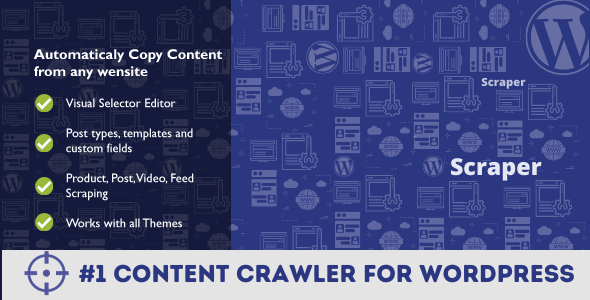
- Visual Scraping Editor: You do not need to be a coding expert. The plugin utilizes a cloud-based visual editor that allows you to click and select elements on a source page to define your scraping rules, generating the necessary XPath automatically.
- Advanced Parsing Methods: Beyond standard HTML, the plugin supports Regex (JSON) Parsing. This allows you to extract structured data from JSON objects embedded in pages, which is essential for modern web applications and dynamic price comparisons.
- WooCommerce Product Creation: This is a major selling point. The scraper supports all WooCommerce tags, allowing you to automate the creation of products, including custom fields, attributes, categories, and even price calculations using built-in math functions.
- Automatic Translation: If your audience is global, the plugin can auto-detect content language and translate it. It supports Google Translate API and DeepL integration, allowing you to localize scraped content instantly.
- Media Handling: The plugin can extract attributes to grab image sources, set Featured Images, and detect image sequences to create Image Galleries. It also downloads these images to your server to ensure reliability.
- Scheduling & Cron Jobs: You can set tasks to run at specific intervals. The plugin includes support for external Cron URLs, allowing your server’s native cron system to trigger scraping for better reliability on high-traffic sites.
- Content Transformation: Use the Search & Replace feature alongside template variables to rewrite or spin the scraped content, ensuring you publish unique variations rather than exact duplicates.
- Proxy & Cookie Support: To avoid IP blocks, you can define proxies and cookies for specific tasks, allowing you to scrape data from geo-restricted or protected sources.
Who Is This For? Use Cases
The versatility of the Scraper – Automatic Content Crawler Plugin for WordPress makes it applicable across various digital business models. It is not just a “copy-paste” tool; it is a data aggregation engine.
Agency Owners and Freelancers
If you manage multiple client sites, particularly for niche news or affiliate review sites, this plugin saves hundreds of hours. You can set up a project once, clone it for other clients, and let the scheduler handle the heavy lifting. The Clone Task feature makes scaling your service offerings effortless.
Affiliate Marketers and Price Comparison Sites
For those in the affiliate space, especially regarding e-commerce, the ability to scrape product prices and update them automatically is gold. The plugin’s math functions allow you to add shipping costs, convert currencies, or apply a markup percentage to the scraped price. It also includes a Duplicate Title Skip feature to keep your database clean.
Content Publishers and News Aggregators
If you run a curated news site or a job board, you can use the visual editor to select specific article titles, excerpts, and images. The Post Status option allows you to save items as drafts for manual review, or publish them directly based on your trust in the scraping rules.
Developers and Data Scientists
Developers will appreciate the Custom Fields and Custom Taxonomies support. This allows the plugin to feed data into custom post types, making it more of a middleware tool that bridges external data sources with complex WordPress data structures.
Technical Details & Compatibility
Before purchasing, it is crucial to understand the technical environment required for this plugin to function optimally. The Scraper – Automatic Content Crawler Plugin for WordPress has specific requirements that differ from standard plugins.
WordPress & PHP Compatibility: The developer has maintained the plugin actively, with recent updates confirming compatibility with WordPress 6.2 and PHP 8.0+. This ensures it works on modern hosting stacks without deprecated code errors.
Server Requirements: Your hosting must allow incoming and outgoing network transfers. This means standard shared hosting with strict outbound firewall rules may block the scraper from reaching external sites. A VPS or dedicated server is often recommended for heavy scraping tasks to avoid memory limit issues, which the developer has addressed in their troubleshooting guides.
Visual Editor Dependency: It is important to note that the visual editor is hosted on the developer’s cloud service. The plugin fetches the JSON configuration from their servers to build the scraping model. This means the plugin requires a connection to their service to set up tasks, though the execution of tasks runs on your server.
Translation API: If you use the translation feature, you must supply your own API key for Google Translate or DeepL. The plugin does not bundle these keys, and you should be aware that these are paid services based on usage volume.
AJAX Limitations: The plugin does not support scraping websites that load content dynamically via AJAX (e.g., infinite scroll pages that require JavaScript execution). It is designed for static HTML and JSON endpoints. If your target source uses heavy client-side rendering, this plugin will not be able to extract that data.
Pros and Cons
To provide a balanced review, we have analyzed the capabilities against the limitations mentioned in the documentation and user feedback.
Pros
- High Customization: The combination of XPath, Regex, and visual selection gives you the power to scrape almost any static website structure.
- E-commerce Focus: The deep integration with WooCommerce, including product galleries and attributes, makes it superior to generic scraping plugins for online stores.
- Value for Money: At $29.00, the feature set rivals that of subscription-based SaaS scraping tools. It is a one-time purchase for a lifetime license, which is a significant cost saving for long-term projects.
- Active Maintenance: The changelog shows consistent updates since 2018, indicating that wpBots is committed to fixing bugs and adapting to new WordPress versions.
- Content Uniqueness Tools: The built-in search/replace, regex transforms, and translation tools help you avoid publishing exact duplicate content, which is vital for SEO.
Cons
- No AJAX Scraping: This is a hard limitation. Many modern sites are SPAs (Single Page Applications), and this plugin will fail to extract data from them, limiting your source pool.
- Cloud Editor Dependency: If the developer’s cloud service experiences downtime, you cannot create new scraping projects, although existing scheduled tasks should continue to run.
- Blocked Sources: The developer explicitly states that Amazon has blocked their servers. This means the plugin cannot scrape Amazon products, and there is a risk that other large retailers like AliExpress may follow suit.
- Learning Curve: While the visual editor helps, understanding XPath and Regex is still necessary for complex scraping tasks. Beginners may struggle with setting up “Special Conditions” or debugging extraction errors.
- Resource Intensive: Scraping large sites with image downloads can consume significant server memory and CPU. You may need to optimize your WordPress configuration or use a dedicated server.
Frequently Asked Questions
Here are the most common queries potential buyers have regarding the Scraper – Automatic Content Crawler Plugin for WordPress.
Does the plugin work with websites that require login or use cookies?
Yes. The plugin supports cookie management. You can define cookies for a specific task by fetching them from your browser. This allows you to scrape content from private member areas or sites that display different content based on user sessions. Additionally, proxy support is available to help bypass geo-restrictions or IP-based rate limiting.
Can I scrape data from JSON APIs or just HTML pages?
You can scrape both. The plugin includes a dedicated Regex (JSON) Parser. You can write regex expressions to extract specific values from JSON objects found within a page source or a direct API endpoint. This is particularly useful for sites that load data via AJAX but leave the JSON payload in the initial HTML source.
What happens if the source website changes its layout?
If the source site changes its CSS classes or HTML structure, your scraping rules may break. However, the plugin includes a Preview Results feature that allows you to test your selectors before running a full task. If a task fails, the detailed logs will help you identify which selector is returning empty data, allowing you to quickly update the XPath in the visual editor.
Final Verdict
In the crowded market of WordPress automation, the Scraper – Automatic Content Crawler Plugin for WordPress stands out due to its balance of power and accessibility. With nearly 2,500 sales and a track record of updates from wpBots, it proves its reliability in production environments. It is not a “set and forget” tool for absolute beginners, but for those willing to invest a few hours in learning the visual editor and XPath basics, it unlocks incredible potential for automated content pipelines.
The primary caveat is the lack of AJAX support and the potential for blocked sources. However, for standard HTML websites, RSS feeds, and JSON endpoints, this plugin offers a comprehensive toolkit that includes translation, proxying, and advanced WooCommerce integration. It effectively replaces several premium plugins and paid APIs with a single $29 investment.
If your goal is to scale your content operations, automate price monitoring, or build a niche affiliate site without the manual copy-paste burden, this plugin is a worthy asset. We recommend purchasing it, utilizing the preview feature to test your source sites, and taking advantage of the developer’s responsive support team to fine-tune your first project.